Lesson 8.2 | Module 8: Driving Test Mentality
Minor, Serious And Dangerous Faults
Understand why some mistakes are feedback and others become test-changing safety problems.
Written Practice Guide
Written practice guide
This lesson is currently taught as a written guide. Use the Module 8 overview for the temporary bonus support videos.
Visual Guide
What This Helps With
Learners often panic because they do not know how faults are judged. This lesson gives the simple version.
The Simple Version
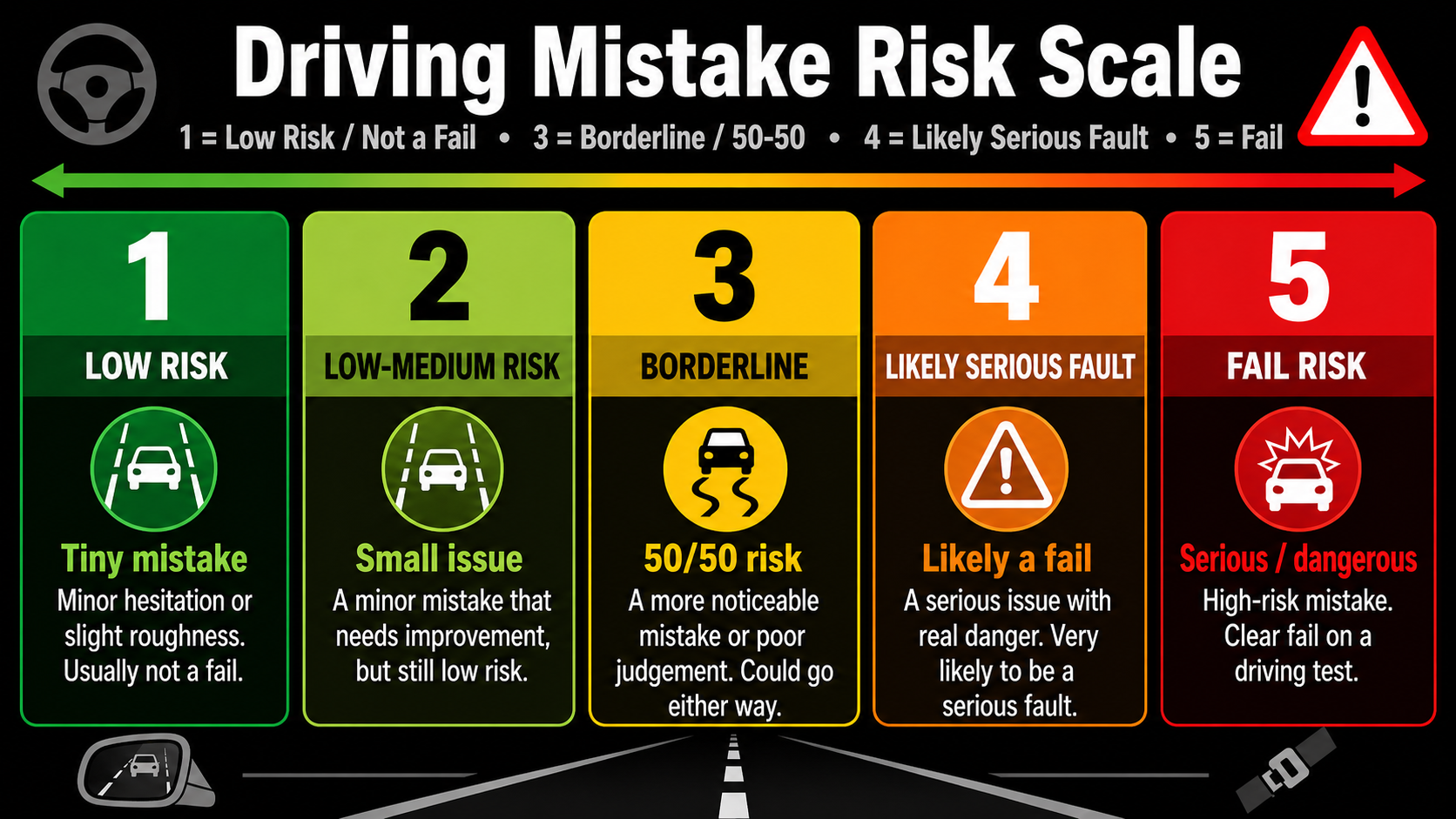
A small fault is usually a driving mistake with limited risk. A serious fault means your driving could cause danger or badly affect someone. A dangerous fault means actual danger happened.
Common Mistakes
- Calling every stall or hesitation an instant fail.
- Ignoring repeated small faults because each one feels minor.
- Not understanding that other road users reacting can make a fault serious.
What Examiners Care About
They judge the risk created by the mistake, the situation around you, and whether it becomes a pattern.
Practise On Your Next Lesson
After a mistake, ask whether it was control, observation, judgement, or planning.
Ask Your Instructor
"If that happened on test, would it be a driving fault or a serious fault?"
Quick Self-Check
- Did someone have to react?
- Was there real danger?
- Is this mistake becoming a pattern?