Lesson 7.6 | Module 7: Bigger Roads
Weather And Night Driving Basics
Adjust your driving when visibility, grip, or light levels make the road harder.
Main Video
Visual Guide
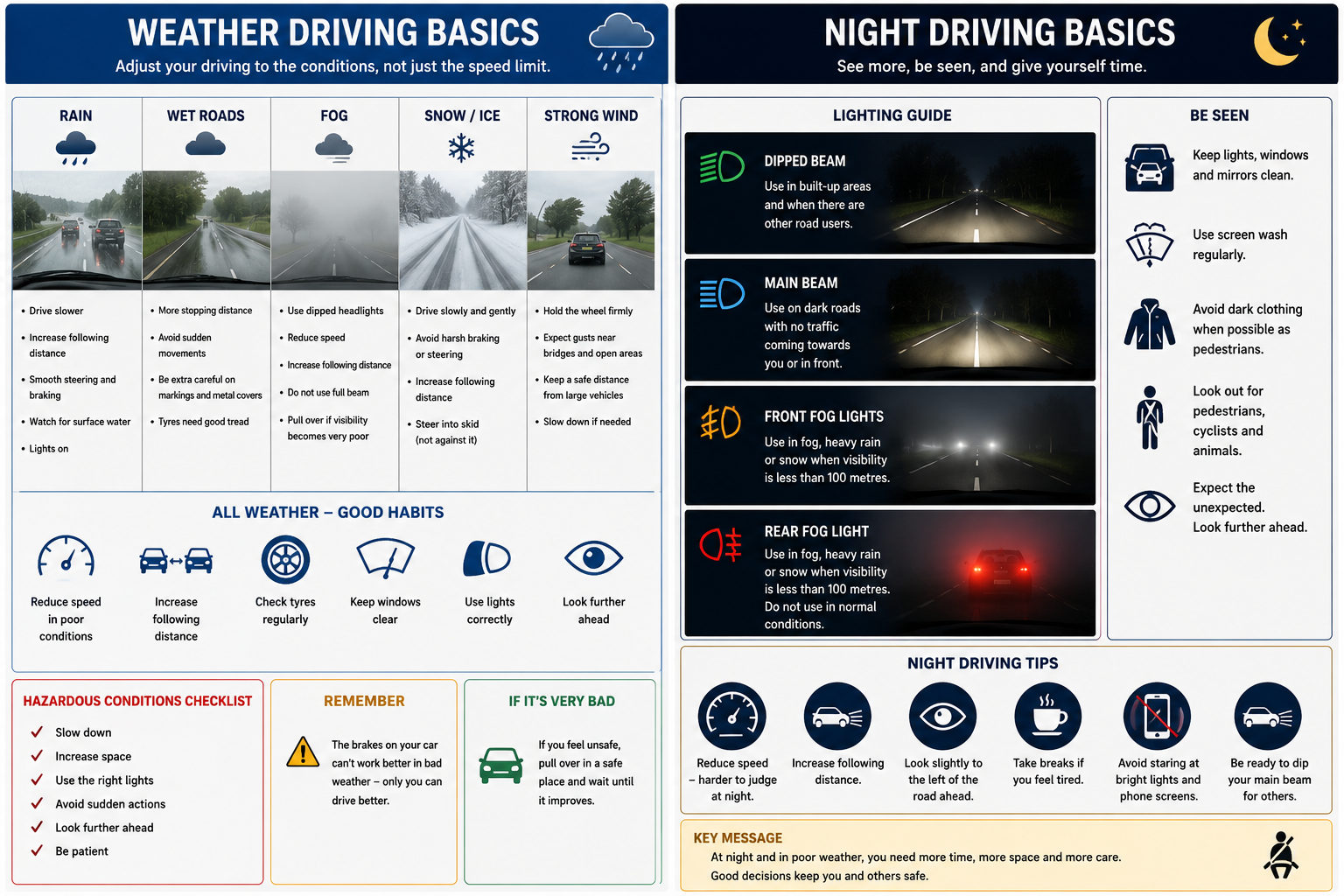
What This Helps With
Bad weather and darkness reduce what you can see and how quickly the car can stop.
The Simple Version
If you can see less or grip is worse, slow down, increase following distance, and use lights properly.
What Changes In Poor Conditions
Your stopping distance increases, hazards appear later, and other road users may make worse decisions. Build in more time: brake earlier, leave a bigger gap, clear your windows, and avoid rushing just because the speed limit has not changed.
Common Mistakes
- Driving the same speed in rain or darkness.
- Following too close.
- Using main beam at the wrong time.
- Not clearing windows before driving.
What Examiners Care About
They want you to adapt. Conditions changing should change your speed, distance, and observation.
Practise On Your Next Lesson
If possible, ask for a lesson in rain, low light, or busier traffic so you can practise adapting. If the conditions are too difficult for your current level, ask your instructor to explain what they would change and why.
Ask Your Instructor
"What should I change about my driving in these conditions?"
Quick Self-Check
- Did I increase distance?
- Did I adjust speed?
- Were my lights/windows correct?