
Lesson 7.1 | Module 7: Bigger Roads
Rural Roads
Drive rural roads by reading the road ahead, not by chasing the speed limit.
Main Video
Visual Guide
What This Helps With
Rural roads can be narrow, bendy, fast, muddy, and unpredictable. You need flexible speed and early planning.
The Simple Version
Look far ahead, slow before bends, expect hidden hazards, and only build speed when the road opens clearly.
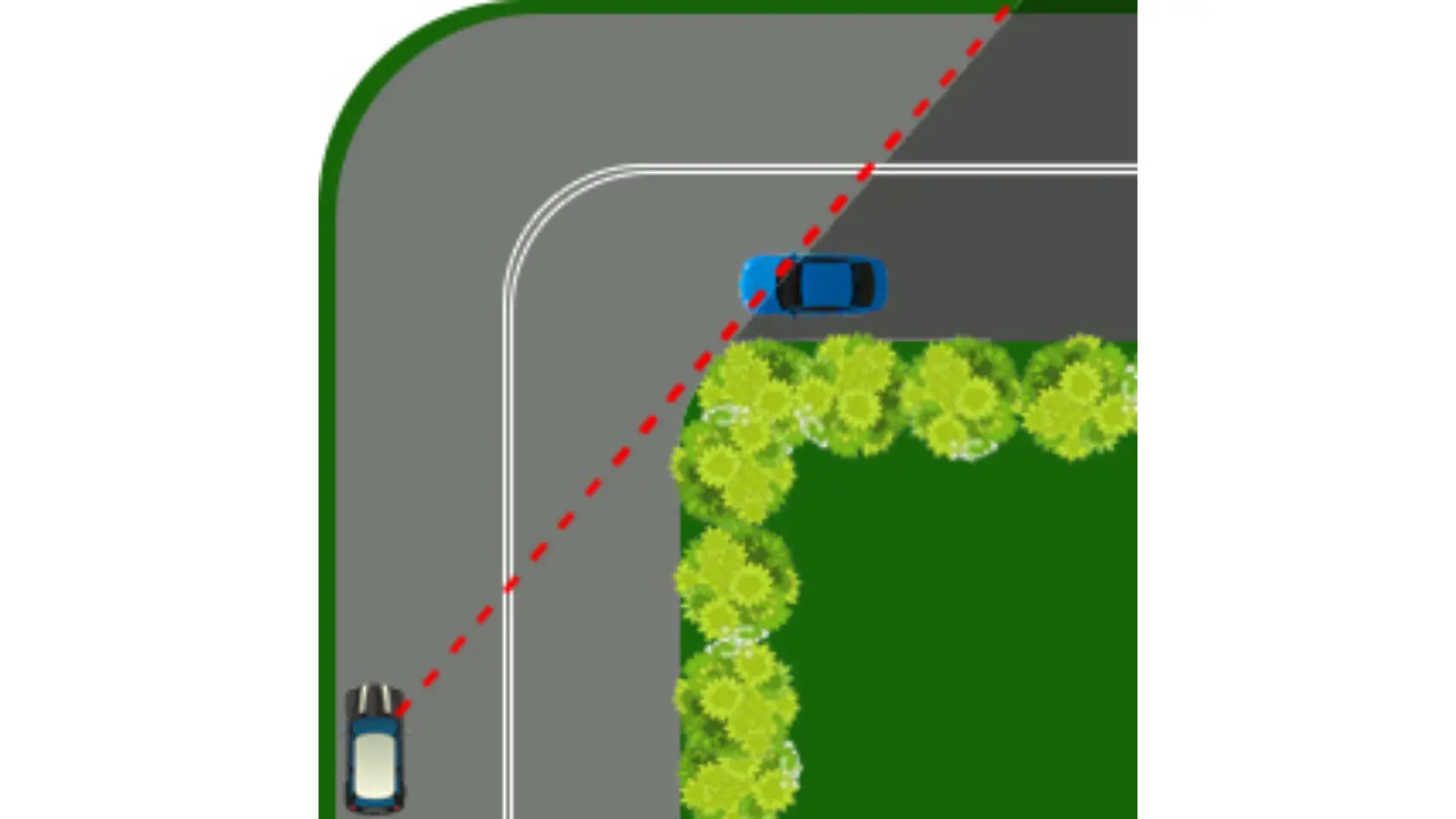
Use The Limiting Point To Choose Speed
- The limiting point is the furthest point you can see down the road, often where a bend or curve blocks your view.
- If that point seems to be getting closer, your view is getting shorter, so slow down.
- As you get nearer to the bend, the road may start opening up and you may be able to see further around it. If the view opens and it is safe, you can hold your speed or gently build speed.
- This is how you judge safe speed on a country road. It is not just about the speed limit.
Common Mistakes
- Driving at 60 because the sign allows it.
- Braking late into bends.
- Hugging the left on narrow roads.
- Not expecting tractors, cyclists, mud, or animals.
What Examiners Care About
They want safe progress. Too fast for the view is dangerous; too slow on clear roads can also build faults. The important question is: could you stop safely in the distance you can actually see?
Practise On Your Next Lesson
Ask your instructor to talk through why each rural speed is safe or unsafe.
Ask Your Instructor
"What did you see that told you to slow down there?"
Quick Self-Check
- Did I read the bend?
- Did I slow before it?
- Was my speed safe for the view?